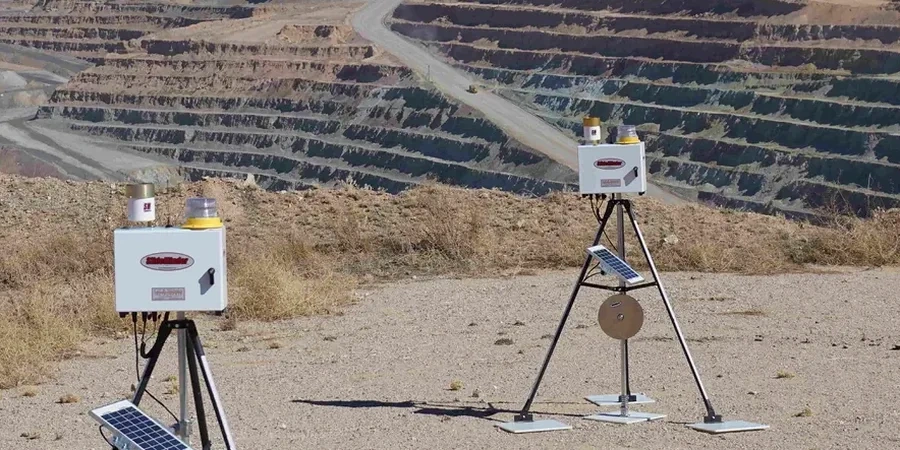
Open cuts in Sarnia behave differently than up on the Shield. Here, the water table sits barely two meters below grade across much of the St. Clair Plain, and the near-surface clays lose shear strength fast once the dewatering balance shifts. We see it on refinery expansion jobs and riverfront utility trenches alike: the excavation looks dry for two weeks, then a sustained rain raises the pore pressure and the bottom starts softening under the excavator tracks. That is why our monitoring approach in Sarnia starts with vibrating wire piezometers installed well before the dig reaches final grade. Real-time pressure data tells us when to adjust the dewatering wellfield—before the heave shows up in the trench floor. For deeper cuts in the Aylmer till, we combine the piezometer array with in-situ permeability testing to calibrate the groundwater model with site-specific numbers rather than textbook assumptions.
In Sarnia, the excavation fails from the bottom up—clay softening and basal heave—long before the shoring wall shows a millimeter of deflection.
Quick answers
What is the cost range for geotechnical excavation monitoring on a typical Sarnia commercial project?
For a standard three-month monitoring program covering one shored excavation with inclinometers, piezometers, and settlement points, the cost typically falls between CA$1,180 and CA$3,310, depending on the number of instruments, reading frequency, and reporting requirements.
Which NBCC provisions apply to excavation monitoring in Sarnia?
NBCC 2020 Part 4 references the need for observation and review during construction, and Section 4.2.4 addresses excavation and dewatering near existing buildings. The geotechnical engineer of record defines the monitoring thresholds based on the site-specific design, with the monitoring plan reviewed as part of the building permit submission for deep excavations.
How often are inclinometer and piezometer readings taken during active excavation?
Automated piezometers can log every 15 minutes. Manual inclinometer traverses are typically performed daily when the excavation is within 1.5 meters of final grade, and weekly during the earlier stages. Frequency adjusts based on observed deformation rates against the alarm thresholds set in the monitoring plan.