← Home · Foundations

Shallow Foundation Design in Sarnia: Geotechnical Verification for Footings and Rafts

Together, we solve the challenges of tomorrow.

LEARN MORE →

The excavator bucket breaks through the topsoil near the St. Clair River, and the ground conditions become immediately apparent. Dense, silty clay with occasional sand lenses. This is Sarnia’s typical subsurface, shaped by glacial lake deposits. Getting the bearing capacity right here depends on reading these layers correctly. Our team runs the numbers on strip footings, isolated pads, and mat foundations, always calibrating models to lab data from Shelby tube samples. In the Chemical Valley, where industrial loads are substantial, we often recommend supplementing the investigation with an in-situ permeability test to confirm drainage characteristics before finalizing the footing dimensions.

In Sarnia’s lacustrine clay, total settlement often controls the allowable bearing pressure more than the ultimate bearing capacity does.

Process and scope

The clay plains under Sarnia have an overconsolidated crust extending roughly 3 to 5 metres below grade. This crust offers good stiffness, but it sits above softer, normally consolidated clay that compresses significantly under load. Settlement, not shear failure, usually governs the design here. We calculate immediate and consolidation settlement using one-dimensional compression data from oedometer tests. For larger commercial builds, the interaction between individual footings must be considered. A plate load test provides a direct modulus of subgrade reaction, which sharpens the raft slab design and avoids over-excavation. Our laboratory, operating under ISO 17025 accreditation, runs classification tests on every sample to confirm the stratigraphy before any bearing pressure is finalized.
Shallow Foundation Design in Sarnia: Geotechnical Verification for Footings and Rafts
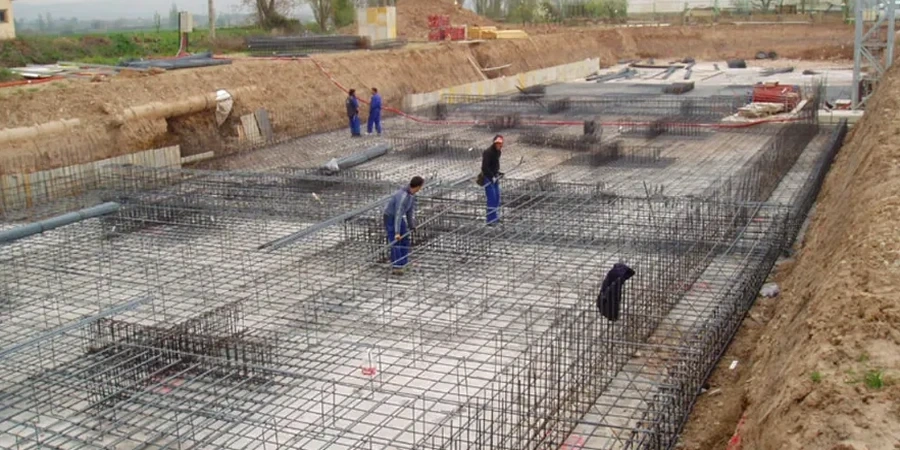
Technical reference image — Sarnia

Local ground factors

The freeze-thaw cycles in Sarnia-Lambton are aggressive. A shallow footing placed above the frost line will heave. The local frost penetration depth reaches about 1.2 metres, and the Ontario Building Code mandates bottom of footing below that level. But the bigger risk is long-term settlement of the deeper soft clay, especially with variable fill placement across a site. Differential movement cracks walls. It also breaks the seals on buried process pipes in industrial facilities. We see this pattern in older sections of town where historical filling was undocumented. The solution combines strict compaction control on granular pad fill with a detailed settlement analysis that accounts for the full compressible stratum thickness.

Need a geotechnical assessment?

Reply within 24h.

Email: [email protected]

Technical parameters

ParameterTypical value
Typical bearing depth in Sarnia1.2 to 2.5 m below finished grade
Allowable bearing pressure (stiff clay crust)100 to 150 kPa (subject to settlement check)
Maximum tolerable total settlement25 mm for conventional structures
Differential settlement limit1/500 angular distortion
Factor of safety (bearing)3.0 per NBCC 2015
Minimum footing width600 mm per CSA A23.3
Key laboratory testOedometer consolidation, unconfined compression

Associated technical services

01

Geotechnical Investigation and Sampling

Drilling and sampling across the site to map the thickness of the overconsolidated crust and identify any sand seams or groundwater pockets that could complicate excavation.

02

Settlement and Bearing Capacity Analysis

Running finite element or closed-form solutions to predict total and differential settlement under structural loads, then back-calculating the safe allowable bearing pressure for each footing type.

03

Construction Review and Subgrade Inspection

Confirming that the exposed bearing stratum matches the design assumptions, checking for softening or disturbance, and verifying compaction of any engineered fill placed beneath footings.

Applicable standards

NBCC 2015 (National Building Code of Canada), CSA A23.3:14 (Design of Concrete Structures), ASTM D1194 (Standard Test Method for Bearing Capacity of Soil for Static Load on Spread Footings), ASTM D2435 (Standard Test Methods for One-Dimensional Consolidation Properties of Soils)

Quick answers

What is the typical cost for a shallow foundation design report in Sarnia?

A geotechnical report covering shallow foundation recommendations typically falls between CA$2.500 and CA$4.200. The final cost depends on the number of boreholes required and the extent of laboratory consolidation testing needed to model settlement accurately.

How deep do footings need to be in Sarnia to avoid frost heave?

The Ontario Building Code requires a minimum footing depth of 1.2 metres to stay below the frost line in the Sarnia area. Deeper placement may be needed if the upper soil is disturbed or if the site has poorly draining fill.

Which laboratory tests are critical for designing footings on Sarnia clay?

Oedometer consolidation tests are essential for predicting settlement. We also run Atterberg limits and unconfined compression tests to classify the clay and confirm the undrained shear strength profile used in bearing capacity calculations.

Can you use shallow foundations for industrial structures in the Chemical Valley?

Yes, in many cases. The stiff clay crust provides good support for spread footings and mat foundations. However, settlement-sensitive equipment or heavy dynamic loads may require a deeper solution, which is determined during the geotechnical analysis phase.
Location and service area

We serve projects in Sarnia and surrounding areas.

View larger map