← Home · Investigation

SPT Testing in Sarnia: Reliable N-Value Data for Foundation Design

Together, we solve the challenges of tomorrow.

LEARN MORE →

A five-story mixed-use project near the St. Clair River taught us early on that Sarnia's soil profile rarely reads like a textbook. The contractor expected compact glacial till but we hit loose silty sand at 4 meters, right where the parking garage footings were going. That single SPT run changed the foundation type from shallow to deep and saved the developer a year of settlement headaches. In this city, the Standard Penetration Test is not a routine checkbox; it is the first real conversation with the ground beneath your site. We run our SPT rig on commercial lots, industrial expansions along Vidal Street, and residential builds throughout Lambton County, always correlating blow counts with the actual behavior of the native clay and till that define the local subsurface.

In Sarnia's layered glacial soils, a single SPT blow count at the wrong depth can misrepresent the entire bearing stratum; we log every foot to catch the transitions.

Process and scope

What we notice across Sarnia is how much the N-value can shift within a single borehole. You might drive through stiff clay at 12 blows per foot and then drop into a loose sand lens at 6, all within two meters. That variability comes from the layered deposition of glacial Lake Warren sediments that blanket the region. Our field crews log every spoon recovery and measure groundwater at the moment of encounter, because perched water in silty layers is more common here than a single static table. For sites where the SPT indicates borderline bearing capacity, we often recommend supplementing with a CPT test to get a continuous resistance profile and confirm whether the loose zone is a thin lens or a deeper deposit requiring ground improvement.
SPT Testing in Sarnia: Reliable N-Value Data for Foundation Design
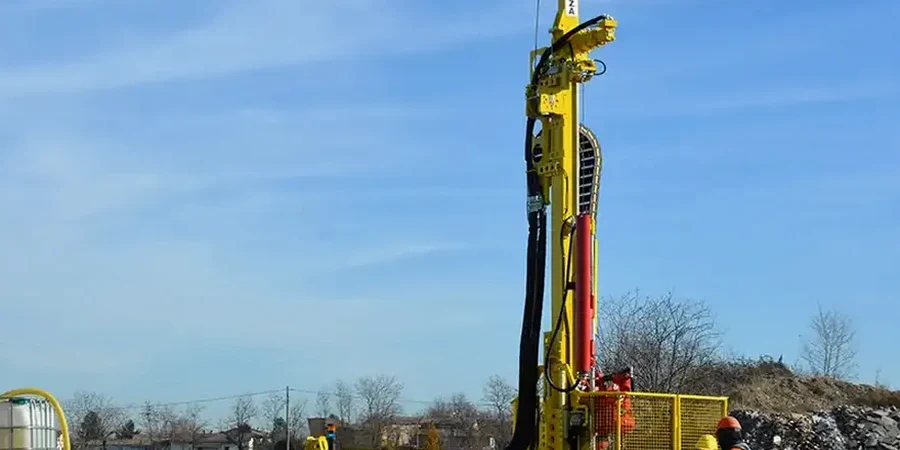
Technical reference image — Sarnia

Local ground factors

The freeze-thaw cycles in Sarnia introduce a risk that warmer climates never face: the upper two meters of soil can undergo significant strength changes between February and April. An SPT run in frozen ground gives artificially high N-values, while the same soil in spring thaw might show a 40% reduction. We schedule winter drilling with this in mind and note ground temperature in the logs. Another local factor is the proximity to the St. Clair River and Lake Huron; fluctuating water levels alter pore pressure in near-shore silts, and an SPT executed without piezometric measurement during high-water season can miss the reduced effective stress that governs long-term settlement. We have seen footings designed on summer blow counts show unexpected movement after a wet fall, which is why we always timestamp our tests and interpret results against seasonal groundwater data.

Need a geotechnical assessment?

Reply within 24h.

Email: [email protected]

Technical parameters

ParameterTypical value
Standard followedASTM D1586-18
Hammer typeSafety hammer with automatic trip
SamplerStandard split spoon, 2 inch OD
Sampling intervalEvery 1.5 m or at stratum change
Energy correctionN60 reported with ER correction
Borehole diameter100 mm to 150 mm depending on depth
Samples recoveredDisturbed and representative
Reporting formatDigital logs with SPT N-value plots

Associated technical services

01

SPT with Laboratory Testing

We pair field SPT sampling with grain size distribution and Atterberg limits testing on recovered split spoon samples, giving you a full picture of soil classification and behavior under load.

02

Deep Foundation Design Support

When SPT data indicates weak near-surface soils, we use the N-values to estimate pile capacity and provide parameter recommendations for driven piles or drilled shafts per CFEM guidelines.

Applicable standards

ASTM D1586-18 Standard Test Method for Standard Penetration Test (SPT) and Split-Barrel Sampling of Soils, NBCC 2015 National Building Code of Canada, Part 4, Section 4.2, CSA A23.3-19 Design of Concrete Structures (foundation provisions)

Quick answers

What does an SPT test cost in Sarnia?

For a standard SPT borehole in the Sarnia area, you can expect between CA$670 and CA$920 per hole, depending on depth, access conditions, and the number of samples taken. Mobilization for smaller sites inside the city is typically lower than for rural Lambton County locations where travel time adds to the day rate.

How deep do you typically drill for SPT in Sarnia?

Most commercial and residential investigations in Sarnia go to 10 or 15 meters, which is enough to penetrate the upper clay and silt layers and reach the competent glacial till. For heavier structures or where deep piles are being considered, we extend boreholes to 25 or 30 meters to characterize the bearing stratum properly.

How long does an SPT investigation take and when do I get results?

A single SPT borehole on a Sarnia site takes about half a day of field work. We deliver a draft log with N-values and soil descriptions within three to four business days, and the final stamped report within a week, ready for your structural engineer to proceed with foundation design.
Location and service area

We serve projects in Sarnia and surrounding areas. More info.

View larger map